Sustainable Construction in Costa Rica: Innovations and Strategies for a Greener Future
Sustainable Construction in Costa Rica Costa Rica has long been recognized as a global leader in environmental sustainability. As the country advances towards its ambitious 2050 […]
Costa Rica has long been recognized as a global leader in environmental sustainability, and the construction industry is central to the country's next phase of that commitment. As the country advances toward its ambitious decarbonization goals, building responsibly is increasingly both a regulatory requirement and a market differentiator for quality properties.
This article covers the innovations, materials, regulatory framework, and practical strategies shaping sustainable construction in Costa Rica, and how Ticonstru integrates these into every project we deliver.
The national drive toward sustainable construction
Costa Rica's National Decarbonization Plan has set clear milestones for the construction sector as part of the country's broader transition to carbon neutrality. The direction is clear: new buildings must increasingly incorporate low-emission designs focused on energy efficiency, waste reduction, and smart building technologies. By mid-century, the goal is for the entire construction sector to be fully electrified, resource-efficient, and reliant on renewable energy sources.
For anyone building in Costa Rica today, aligning with this direction is not just responsible. It is a strategic investment in long-term property value and lower operational costs. Properties that meet or exceed these standards are increasingly preferred by buyers and renters who actively look for sustainability credentials, particularly in the high-end residential and vacation rental markets of Guanacaste and Puntarenas.
Key innovations driving green construction in Costa Rica
Bioclimatic and energy-efficient design
The most impactful sustainability decisions happen at the design stage. Bioclimatic architecture integrates natural ventilation, passive cooling, and solar orientation into the building's form, reducing reliance on mechanical systems from day one. A home designed to work with Costa Rica's tropical climate, with proper orientation, cross ventilation, roof overhangs, and shading elements, stays comfortable through most of the year without continuous air conditioning.
Smart insulation systems and high-performance windows improve indoor comfort while minimizing heat transfer. In coastal environments like those across Guanacaste and the South Pacific, these design decisions also affect material durability and long-term maintenance costs. Ticonstru's custom homes service addresses bioclimatic design as a foundation of every architectural project, not an optional layer added at the end.
Renewable energy integration
Costa Rica generates nearly all of its electricity from renewable sources, which changes the environmental argument for on-site renewable energy compared to fossil-fuel-heavy grids. The practical case here is energy independence, protection from rate increases, and resilience during outages.
- ◆Solar photovoltaic systems feed power into the ICE grid through net-metering, reducing or eliminating monthly electricity costs. Grid-tied systems suit most residential builds in areas with reliable grid access.
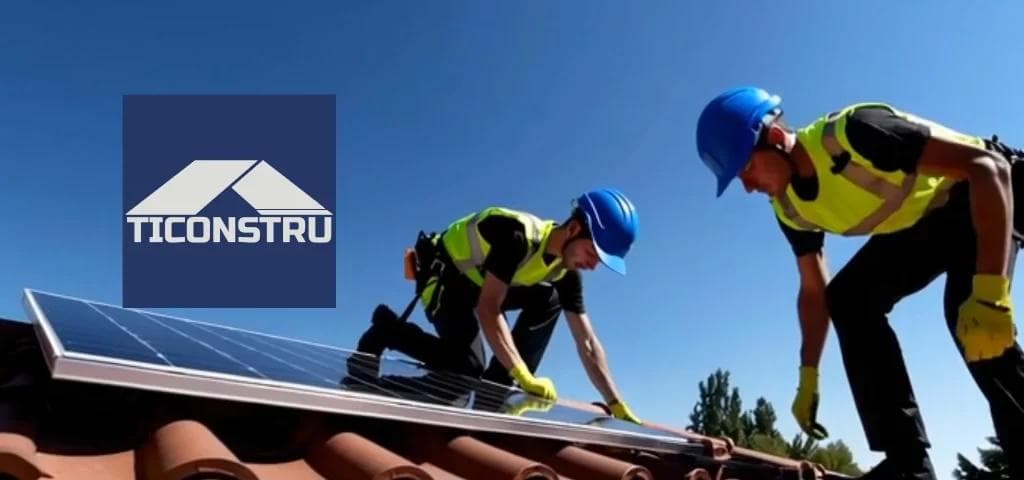
- ◆Solar water heating uses rooftop thermal collectors to heat domestic water directly from the sun. Cost-effective across Costa Rica's climate with short payback periods. Standard on most Ticonstru builds.
- ◆Battery storage systems paired with solar panels allow a home to operate independently during grid outages. The right choice for remote properties or vacation homes where reliability matters.
- ◆Wind energy is viable at residential scale in specific locations with consistent winds, particularly in parts of Guanacaste's mountains. Where feasible, it complements solar output on cloudy days and at night.
Every system is evaluated per site and project rather than applied generically. Ticonstru's solar and green building service covers the full range of options, from grid-tied PV to hybrid systems with battery storage, sized and specified for each home's actual energy profile.
Sustainable construction materials
Traditional concrete and steel production generates significant carbon emissions. Sustainable alternatives are gaining traction in the Costa Rican market and offer both environmental and practical benefits:
- ◆Bamboo and engineered wood are renewable, store carbon during growth, and offer strong structural properties when properly treated for the tropical climate.
- ◆Recycled and reclaimed materials reduce extraction demand and landfill waste. Recycled aggregate, reclaimed wood, and salvaged materials from demolition projects can be incorporated into new construction where performance requirements allow.
- ◆Low-carbon concrete mixtures incorporating supplementary cementitious materials like fly ash or slag reduce the carbon intensity of one of construction's most-used materials.
- ◆Locally sourced materials reduce transportation emissions and support the local economy. Many excellent construction materials are produced in Costa Rica or sourced regionally.
Material durability in Costa Rica's climate is inseparable from sustainability. A material that fails prematurely in a high-humidity, salt-air coastal environment is neither sustainable nor economical. For coastal builds in particular, material specification requires specific expertise. See our guide on building on sloped land in Costa Rica for how terrain and climate intersect with material choices in more demanding sites.
Circular economy in construction
The shift toward a circular economy in construction means designing for reuse, minimizing waste generation, and recycling materials rather than discarding them after a single use. In practice, this includes:
- ◆Demolition waste repurposing into new building materials
- ◆On-site water recycling through greywater treatment systems for irrigation and non-potable uses
- ◆Modular construction techniques that reduce on-site waste and improve material efficiency
- ◆Construction scheduling and procurement that minimizes material overordering and on-site waste
Water management is a particularly relevant aspect of circular economy thinking in Costa Rica's coastal communities. Ticonstru integrates rainwater harvesting, cistern systems, greywater reuse, and inline filtration into projects where site conditions and client priorities call for them. See our landscape service for how site drainage and water management are handled as part of the overall project, not as an afterthought.
Sustainable building regulations and certifications
Costa Rica promotes green construction through a combination of mandatory regulations and voluntary certification programs:
SETENA environmental review. The Secretaría Técnica Nacional Ambiental categorizes construction projects by environmental impact. Projects in sensitive areas, near water bodies, or in coastal zones require more rigorous environmental review before permits are issued. Identifying the SETENA category for your lot before purchasing is a critical step. The full permit sequence is covered in our complete guide to building in Costa Rica.
CFIA standards. The Colegio Federado de Ingenieros y Arquitectos reviews all construction plans before permits are issued, including the structural, electrical, and systems documentation. Sustainability features and energy systems must be documented in the drawings submitted for review.
Green building certifications. Voluntary programs aligned with international green building standards are available in Costa Rica and increasingly valued by buyers and renters in the premium market. Properties with documented sustainability credentials outperform equivalent uncertified properties in segments where the buyer profile values environmental responsibility.
Tax incentives. Government programs support developers adopting low-impact construction techniques, including incentives for renewable energy installations and energy-efficient building systems. These programs evolve with the regulatory environment. Staying current with available incentives is part of Ticonstru's advisory role for clients.
The benefits of building sustainably in Costa Rica
Lower operational costs. Energy-efficient homes with solar systems, passive cooling, and water management infrastructure cost less to run from day one and generate cumulative savings over the property's life.
Higher property value. Green-certified and sustainability-integrated properties are in increasing demand from both buyers and renters, particularly in the vacation rental and luxury residential segments that drive Guanacaste and Puntarenas real estate markets.
Better occupant comfort. Natural lighting, cross ventilation, non-toxic materials, and stable indoor temperatures create a more comfortable living environment than mechanically overcooled, artificially lit interiors.
Environmental protection. Costa Rica's biodiversity and natural environment are the foundation of its tourism economy and quality of life. Construction that minimizes its ecological footprint contributes to preserving what makes the country exceptional.
Long-term resilience. Buildings designed with climate conditions in mind, with proper drainage, appropriate materials, and passive strategies, withstand Costa Rica's weather more effectively and require less remedial maintenance over their lifespan.
How Ticonstru builds sustainably
Sustainability at Ticonstru is integrated across all services. The bioclimatic design principles described above are part of every architectural project from the first site assessment. The renewable energy, water, and landscape systems we deliver are evaluated per project rather than applied generically.
The relevant services for clients building sustainably:
- ◆Viva Turnkey. The complete build from design through occupancy permit, with sustainability integrated from site assessment through material specification and systems design. Starting at $1,450/m² for high-end and $1,700/m² for luxury, all professional fees and permits included.
- ◆Solar and green building service. Site-specific evaluation and design of photovoltaic systems, solar water heating, battery storage, and wind energy where applicable.
- ◆Landscape service. Native planting, drainage design, irrigation, and site work that works with the natural topography and supports water management goals.
- ◆Custom homes service. Architectural design that starts with the site, the climate, and the client's program before any aesthetic decisions are made.
- ◆Land and build service. Includes a technical site assessment covering solar exposure, wind potential, water access, drainage, and SETENA category before you commit to a lot purchase.
To start a conversation about building sustainably in Costa Rica, get a quote here or reach us on WhatsApp.
Frequently asked questions
What are Costa Rica's decarbonization goals for construction?
Costa Rica's National Decarbonization Plan sets a path to carbon neutrality by 2050, with the construction sector transitioning to low-emission designs, full electrification, and renewable energy reliance. New buildings are increasingly required to incorporate energy efficiency and sustainable design as baseline standards.
What eco-friendly materials are used in Costa Rica construction?
Bamboo, engineered wood, low-carbon concrete mixtures, recycled and reclaimed materials, and locally sourced products are all in use. Material selection in Costa Rica always needs to account for climate performance, particularly durability in high-humidity and coastal salt-air environments.
Does sustainable construction cost more?
Upfront costs for sustainable features like solar systems, water management infrastructure, and premium materials are higher than standard specifications. Long-term savings from reduced energy and maintenance costs, combined with higher property values and stronger rental performance, typically justify the investment. The payback period varies by feature and usage pattern.
How do I incorporate solar energy into my build?
Ticonstru's solar service evaluates each site individually. System sizing depends on the home's energy profile, roof orientation and pitch, shading conditions, and whether battery storage is appropriate. We design the system as part of the build, not as an add-on after construction.
What makes Ticonstru's approach to sustainable construction different?
We integrate sustainability from the first site assessment rather than offering it as an optional upgrade. Bioclimatic design, material specification for the climate, and systems design are part of every project's foundation. For clients building from abroad, the Viva Turnkey program handles all of this under one contract with full project accountability.
Interested in building?
Talk to us about your project.
WhatsApp is the fastest way to reach us. Or use the quote form for something more detailed.