
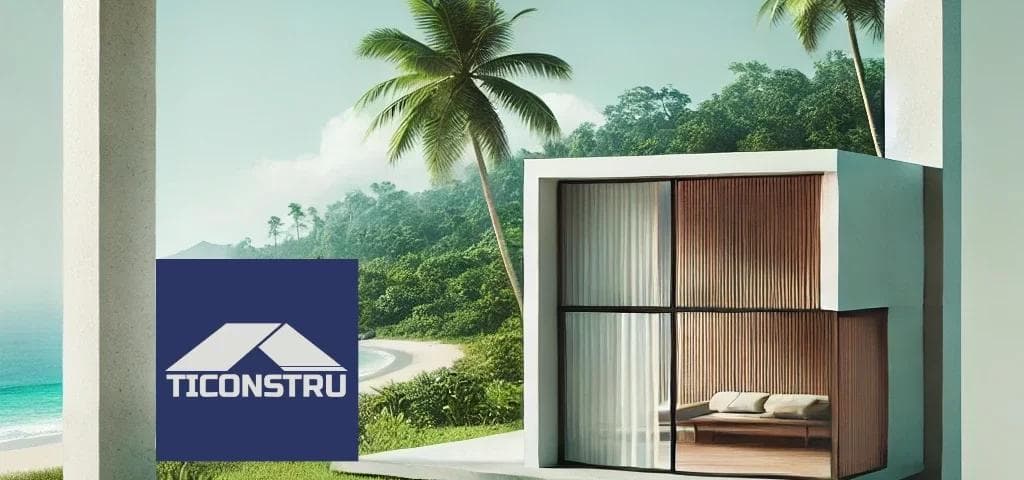
The Growing Construction Industry in Costa Rica: A 2025 Outlook for Foreign Investors and Retirees
The Thriving Construction Industry in Costa Rica: Opportunities for 2025 and Beyond Costa Rica’s construction industry has experienced significant growth in recent years, driven by increasing […]
Costa Rica's construction industry has experienced sustained growth over the past several years, driven by increasing foreign investment, a steady flow of retirees choosing the country for its quality of life, and growing tourism demand for quality coastal properties. The fundamentals that have made Costa Rica attractive to international buyers have not changed: political stability, strong property rights for foreigners, universal healthcare, and a natural environment that remains genuinely exceptional.
This article covers what is driving the current cycle of construction activity, which regions are seeing the most investment, what trends are shaping how people build, and what it looks like to work with Ticonstru on a project in this market.
Why Costa Rica continues to attract foreign investors and retirees
Property rights and legal framework. Foreigners in Costa Rica have the same property ownership rights as local citizens for titled land. The legal pathway to ownership is clear, the Registro Nacional provides transparent public title registration, and the country's judicial system has a track record of protecting property rights. This combination is uncommon in the region and is a genuine differentiator for buyers comparing Costa Rica against other Central American and Caribbean markets.
Quality of life. Costa Rica consistently ranks among the top countries in the world for quality of life relative to cost. Universal healthcare through the CCSS system, a high literacy rate, political stability since the mid-20th century, and a natural environment with exceptional biodiversity all contribute. For retirees in particular, the combination of healthcare access, affordable cost of living, and proximity to North America is difficult to match anywhere else in the region.
Tourism and rental income. Costa Rica's tourism industry draws millions of international visitors annually, the majority from the US and Canada. This creates durable demand for vacation rental properties in the main coastal communities, providing investors with a rental income stream when they are not occupying the property themselves. For more on the rental investment opportunity, see our post on Costa Rica's best locations for Airbnb and vacation rentals.
Key regions driving construction activity
Guanacaste
Guanacaste remains the most active market for luxury coastal construction in Costa Rica. The province's dry season climate, direct international flights through Liberia Airport (LIR), and well-established expat communities in Tamarindo, Flamingo, Nosara, and Playas del Coco support consistent demand. Communities like Papagayo and Las Catalinas continue to attract high-net-worth buyers building primary residences and investment properties. Infrastructure improvements in the province have extended the practical reach of development beyond the established beach towns.
Puntarenas and the South Pacific
Puntarenas offers a broader range of markets, from the high-volume Jacó corridor to the emerging Costa Ballena communities of Dominical, Uvita, and Ojochal. Manuel Antonio remains one of the strongest rental income markets in the country. Santa Teresa on the Nicoya Peninsula has become an internationally recognized destination commanding premium property values. The Costa Ballena represents one of the more compelling entry points for buyers who want quality coastline with more room for appreciation than the fully mature Guanacaste markets. For a full breakdown of each community, see our guide to living in Puntarenas.
Trends shaping how people build in Costa Rica
Sustainability as baseline, not add-on
The shift toward sustainable construction has moved beyond marketing language into actual building practice, driven both by regulatory direction and by buyer demand. Energy-efficient design, solar systems, water management infrastructure, and climate-appropriate materials are increasingly the baseline expectation for quality construction rather than premium features. Costa Rica's National Decarbonization Plan sets a clear policy direction: the construction sector is moving toward full electrification and renewable energy reliance. Builders who are not already operating within this framework are behind the market. For a detailed look at sustainable building practices, see our post on sustainable construction in Costa Rica.
Remote ownership and turnkey solutions
The majority of foreign buyers building in Costa Rica are doing so from abroad. This has driven strong demand for integrated turnkey construction solutions that consolidate architecture, engineering, permitting, construction, and project management under a single contract with a single accountable team. The alternative, coordinating multiple independent parties from a different time zone, is how projects go wrong. Ticonstru's Viva Turnkey program was built specifically for this client profile.
Luxury market growth
The premium segment of Costa Rica's residential market has grown consistently, with demand from high-net-worth buyers from North America and Europe who want a well-built, well-designed property in a genuinely exceptional natural setting. These buyers have high expectations for both the construction quality and the process: clear communication, milestone-based payment structures, professional documentation, and a finished product that performs as designed. The gap between what these buyers expect and what a disorganized construction process delivers is where most project problems originate.
Coastal and sloped site construction
The most desirable lots in both Guanacaste and Puntarenas are often on hillsides with ocean views rather than flat beachfront. Building on sloped terrain requires specific engineering for foundations, retaining walls, and drainage that flat-site builders are not always equipped to handle. Ticonstru has extensive experience building on the coastal hillsides of both provinces. Our guide on building on sloped land in Costa Rica covers what this adds to a project and why it is worth it.
What Ticonstru brings to this market
Ticonstru has been building luxury residential properties in Guanacaste and Puntarenas since 2018. The Viva Turnkey program delivers the complete build from architectural design through occupancy permit under a single contract. All professional fees, engineering, and permit management are included. No separate charges for architecture or permitting.
Viva pricing starts at $1,450 per square meter for high-end construction and $1,700 per square meter for luxury. Pool, landscaping, and solar are priced and managed separately as part of the same project. For the full cost picture, see our guide on construction costs in Costa Rica.
For buyers who have not yet secured land, our land and build service covers lot identification, due diligence, and site assessment before purchase. Available lots we have already sourced and verified are at ticonstru.com/land.
The relevant guides for foreign investors evaluating Costa Rica:
- ◆Complete guide to building in Costa Rica
- ◆Laws, financing, and taxes for foreign buyers
- ◆Should you build or buy in Costa Rica?
- ◆Living in Guanacaste
- ◆Living in Puntarenas
To start a conversation about a project, get a quote here or reach us on WhatsApp.
Frequently asked questions
What is a turnkey construction solution?
A turnkey solution handles every aspect of the construction process under one contract: design, permits, construction, and delivery. The client receives the finished property without managing multiple independent contractors, permits, or timelines. Ticonstru's Viva Turnkey program covers this from site assessment to occupancy permit.
Which regions offer the best investment returns in Costa Rica?
Guanacaste for highest short-term rental performance and strongest international buyer demand. Puntarenas for more varied entry prices and strong rental markets in Manuel Antonio, Jacó, and Santa Teresa. The Costa Ballena for earlier-stage market entry with more appreciation potential. Each market suits different buyer profiles and investment strategies.
How does Ticonstru work with international clients?
Most of our clients are building from abroad. The Viva Turnkey structure is designed for this: single-point accountability, milestone-based payments tied to verified progress, weekly photo reporting, and clear communication throughout. Remote management of the full process is how we operate by default, not as a special accommodation.
What trends are shaping construction in Costa Rica right now?
Sustainability integrated as baseline rather than add-on, strong demand for turnkey solutions from foreign buyers, growth in the luxury segment, and increasing sophistication in sloped and coastal site construction. The market continues to reward quality construction and penalize shortcuts, which has always been the case but is increasingly visible in pricing differentials between well-built and poorly-built properties.
Interested in building?
Talk to us about your project.
WhatsApp is the fastest way to reach us. Or use the quote form for something more detailed.